Investigation Report:
The Curious Case of Semeret’s Withdrawal – Unanswered Questions and Procedural Anomalies
TADAUK.ORG
LONDON
Date: March 12, 2026
The Case That Vanished: Unraveling the Procedural Mirage Behind Semeret’s Shocking Withdrawal:
The decision by the Tigray Democratic Solidarity (Semeret) Party to withdraw its legal challenge regarding the status of five Tigrayan constituencies has raised more questions than it answers. While party leader Getachew Reda claims the lawsuit was rendered moot after discovering the House of Federation (HoF) directive was an informal act by Speaker Agegnehu Teshager, a glaring absence of official corroboration from the involved institutions leaves this explanation hanging by a thread. The silence from the HoF, the Federal High Court, and the National Election Board of Ethiopia (NEBE) creates a vacuum that demands scrutiny.
1. The Missing Retraction: Where is the House of Federation?
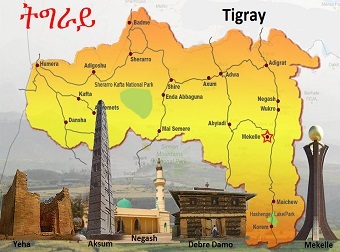
The cornerstone of Semeret’s justification is the assertion that the HoF never actually adopted the decision to separate the constituencies of Humera, Adi Remets, Tselemti, Korem Ofla, and Raya Alamata from Tigray’s electoral oversight . Getachew Reda claims the directive was a “personal decision” by Speaker Agegnehu Teshager, masquerading as state policy without the constitutionally mandated two-thirds quorum or vote .
If this is true, it constitutes a monumental breach of parliamentary procedure by the highest constitutional body in the land. Yet, as of this report, the House of Federation has issued no retraction statement, no correction, and no apology. If an institution’s Speaker acted ultra vires (beyond his authority) and misled a constitutional body like NEBE, the legal obligation is for that institution to publicly correct the record. The HoF’s absolute silence suggests either an internal cover-up or, conversely, that the decision was indeed institutional—directly contradicting Semeret’s claim. Without an official retraction from the HoF itself, the directive to NEBE remains a live document, and Semeret’s withdrawal appears to be accepting an administrative error that the responsible party has not admitted to.
2. The Court in Limbo: The Unanswered Question of Jurisdiction
Semeret’s withdrawal also ignores the existing legal reality inside the courtroom. Prior to this withdrawal, the Federal High Court had already recognized the gravity of the situation. On February 26, the Court issued a temporary injunction suspending NEBE’s implementation of the HoF decision, ruling that proceeding would render the litigation “moot” . The case was actively moving forward.
Semeret’s voluntary withdrawal, based on “new evidence” regarding the HoF’s procedure, leaves the court’s order in a bizarre state of limbo. If the court accepted Semeret’s logic, it would effectively be ruling that the entire basis for the injunction—and the lawsuit—was a mistake. However, court procedure typically requires the judiciary to close the file or issue a final order. Where is the Federal High Court’s reaction to this reasoning? If the court agrees that the HoF letter was procedurally invalid, it has a duty to issue a public finding to that effect, preventing NEBE from acting on a “personal letter” in the future. The lack of a judicial statement acknowledging this procedural invalidity means that, technically, the injunction is still valid and the issue remains unresolved in the eyes of the law.
3. The Silent Election Board: A Failure of Institutional Integrity
Perhaps the most damning silence comes from the National Election Board of Ethiopia (NEBE). When the HoF letter was received in early February, NEBE immediately complied, announcing that elections in those five districts would be held “outside of the Tigray Region” . NEBE stated explicitly it would “implement the 7th General Election in accordance with the decision of the House of Federation” .
Now, Semeret claims that letter had “no legal basis.” Where is NEBE’s statement acknowledging this error? If a constitutional body acted on a procedurally invalid directive, NEBE’s independence and credibility demand a public clarification. By staying silent, NEBE is either complicit in the original “illegal” order, or it is ignoring Semeret’s withdrawal as a political maneuver. The Board cannot simply wash its hands of this; it must clarify whether its implementation of that directive is now suspended, given that the “legal basis” for its actions has been publicly repudiated—even if only by one party to the suit.
The Fishy Silence of the System:
Everything about this sequence of events defies standard legal practice. Semeret asks us to believe that the highest council in the land issued a forged or procedurally void document, that the election board obeyed it, and that the courts were about to arbitrate it—yet now, everyone is just supposed to move on because Semeret “noticed” the error.
The fallacy in Semeret’s statement is the presumption that a legal challenge disappears just because the plaintiff leaves the room. Constitutional issues are not private contracts. They require public resolution. The lack of a retraction from the HoF, the absence of a final ruling from the Federal High Court, and the deafening silence from NEBE suggest that Semeret’s withdrawal was a political decision disguised as a procedural realization. Until these three institutions break their silence, the integrity of Ethiopia’s electoral process and its constitutional bodies remains in serious doubt.
The Political Calculus: Sabotage Disguised as Jurisprudence:
Beyond the legal technicalities lies a far more troubling political reality: Semeret’s withdrawal appears to be a calculated act of sabotage against Tigrayan territorial integrity, executed to secure the party’s political survival at the behest of its handlers in the Prosperity Party (PP). The timeline of events reveals a damning pattern. Just weeks ago, Getachew Reda stood before the public condemning the House of Federation’s decision as an “unconstitutional” act that “crushes institutional independence” and declaring that Semeret would not participate in elections until “corrective measures are taken” . His party secured a historic court injunction against NEBE . Now, without any public retraction from the HoF, any statement from the court, or any acknowledgment from NEBE, Semeret has simply abandoned the fight. This is not legal discovery; this is political surrender. The evidence strongly suggests that Semeret—a party led by a man who simultaneously serves as Prime Minister Abiy Ahmed’s Advisor on East Africa —has made a backroom calculation: abandoning the five constituencies to Amhara administration is the price of federal patronage. By withdrawing the case, Getachew Reda is effectively legitimizing the very “administrative annexation” his party previously condemned, hoping that his compliance will be rewarded with federal support to govern whatever remains of Tigray in the next election .
Tigray’s Internal Enemies: The Tragedy of Local Complicity-
The most devastating aspect of this affair is that Tigray now faces not only external threats to its territorial integrity but internal enemies wearing the guise of its own children. The fragmentation of Tigrayan political leadership has created a vacuum where personal ambition trumps collective survival. Semeret was born from a factional split within the TPLF, with Getachew Reda and his allies expelled from the party they once led . Since then, they have increasingly aligned themselves with federal forces against their former comrades, with credible reports indicating that the Tigray Peace Forces—allegedly backed by Simret—receive federal support to undermine the TPLF-administered interim government in Mekelle . In this context, the withdrawal from the territorial lawsuit is not an isolated legal decision but part of a broader pattern: Semeret leaders have chosen to secure their own political futures in Addis Ababa rather than defend Tigrayan land in the courts. They are handing to Amhara, through judicial abandonment, what generations of Tigrayans defended through sacrifice. History will record that when the constitutional battle for western Tigray reached its critical moment, some of Tigray’s own sons stood on the side of the annexationists—not because the law required it, but because their political survival depended on pleasing those who seek to redraw the map. Three Institutions, Zero Answers? This is Constitutional Cover!!
TADAUK.ORG
Info@tadauk.org